

High above the streets of the historic Hungarian city of Eger, in the top tower of the Lyceum building, visitors can encounter a rare piece of living history: a working camera obscura that still shows the city in real time. Reaching it involves climbing through the levels of Eger’s Lyceum and its astronomical observatory, and the ascent itself becomes part of the visit, leading through spaces built for scientific study more than two centuries ago.
The Lyceum dates from the late 18th century, when it was founded as an educational center closely tied to scientific study. The tower observatory and its optical equipment were designed in the 1770s, at a time when astronomy and optics were taught side by side and formed an important part of academic life.
A camera obscura is, in simple terms, a dark room that turns the outside world into a live projection. Light enters through a small opening or a lens, travels through mirrors, and forms an upside-down image on a surface inside. It is the same basic principle that later led to photography.
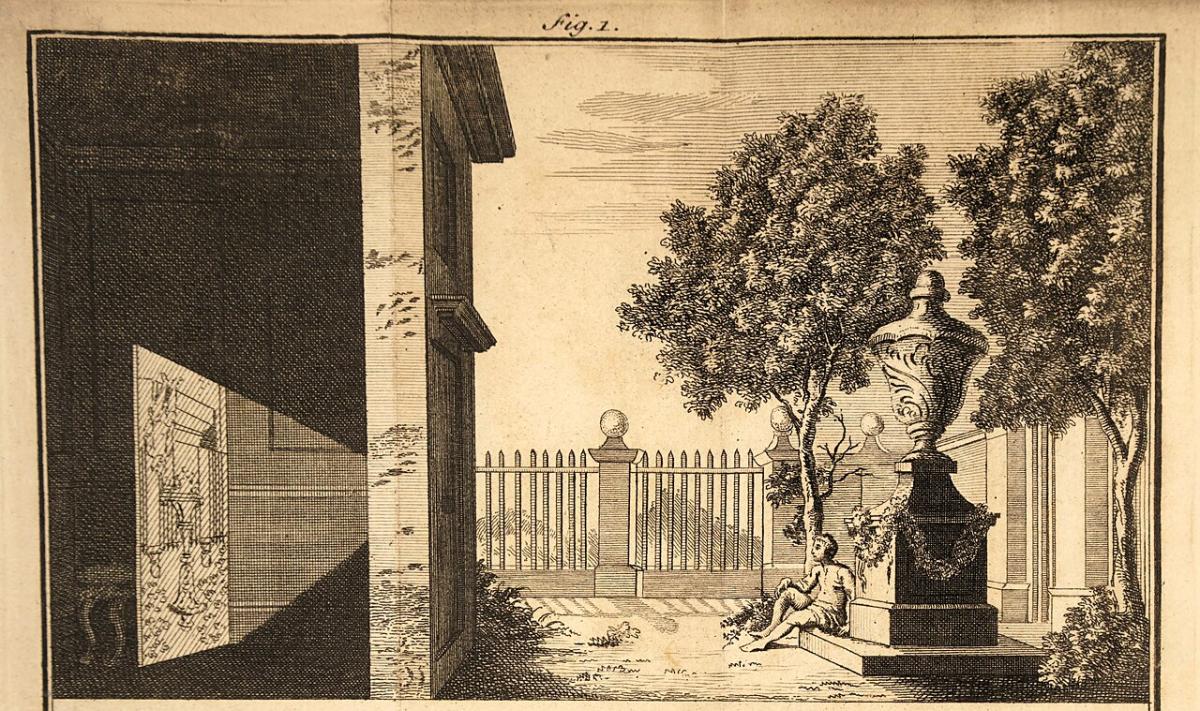
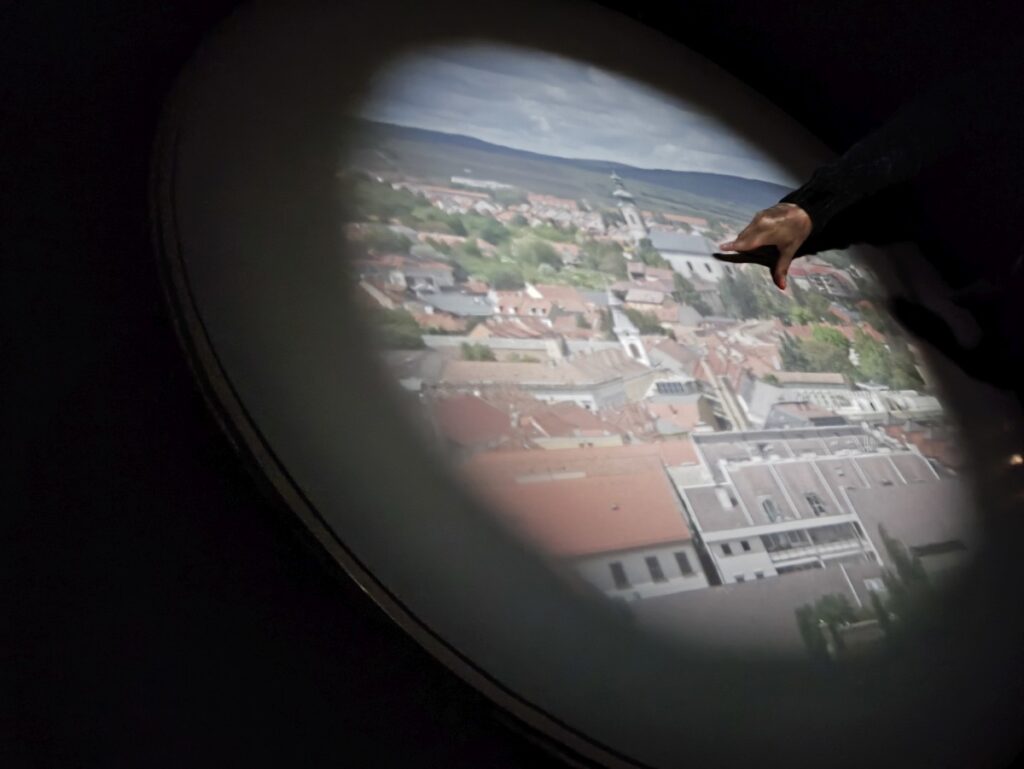
The version in Eger is built into the structure of the tower, with a rotating mirror system at the top collecting the view of the city and directing it downward. Inside the dark chamber, the moving scene appears on a white table, sharp enough that you can follow people walking or cars passing. The principle is similar to that of a periscope, similar to those used in submarines, where mirrors guide light from above into a viewing space below.
In the 19th century, camera obscuras were not limited to scientific buildings like the one in Eger. They also became popular public attractions, especially in coastal towns. Seaside resorts in Britain and other parts of Europe installed camera obscura towers where visitors could watch live views of the shoreline projected inside a dark room.
Before cinema or television existed, this was a novel form of entertainment: people gathered to observe ships arriving, waves rolling in, and crowds moving along promenades, all displayed as a moving image created purely by light and mirrors. These installations turned an optical principle into a shared social experience, and the survival of working examples like the one in Eger helps explain why the device held such appeal for earlier audiences.

The Eger instrument is often described as one of the oldest camera obscuras still operating in continental Europe. It was associated with the Jesuit astronomer Maximilian Hell, who helped plan the scientific equipment of the Lyceum. The observatory dome was completed in 1778, and the device soon became both a teaching tool and a public attraction. While early camera obscuras were used by artists and scientists, by the 19th century they were also installed in public viewing towers, where people paid to watch live panoramic scenes projected indoors.
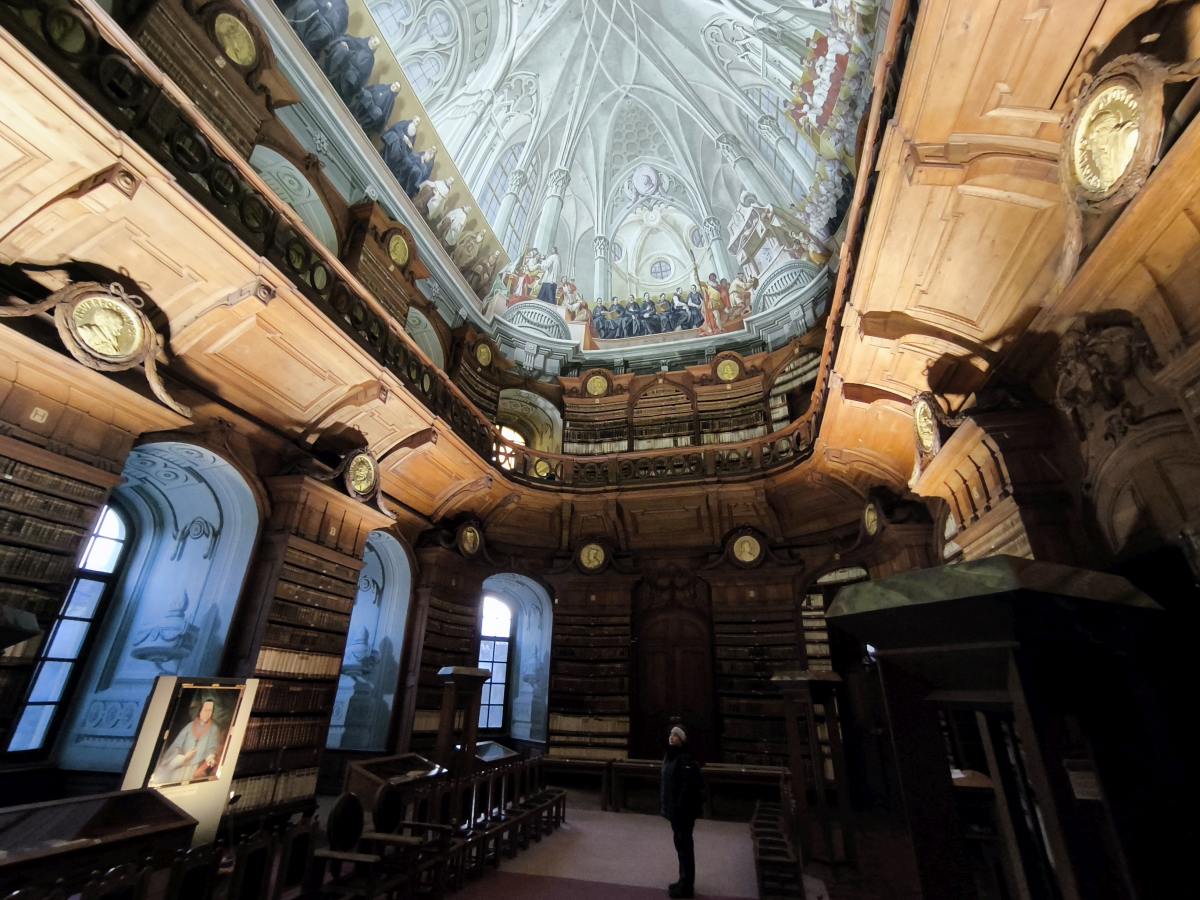
Before reaching the dark chamber, visitors pass through parts of the Lyceum that are worth taking time to explore. One highlight is the Archdiocesan Library, founded in the 18th century. Its large reading hall contains thousands of historic volumes and features painted ceilings and carved wooden shelves. Even for those who do not read Latin or old Hungarian texts, the room itself gives a strong sense of how knowledge was collected and shared in earlier centuries.
The climb also leads through an exhibition devoted to astronomy and optics. Old telescopes, measuring instruments, and early photographic equipment are displayed along the route. These objects show how people studied the sky long before modern electronics.
There is also an interactive section where visitors can experiment with light and lenses. Children and adults alike tend to spend time here, adjusting mirrors and observing how images change with distance and angle. The exhibition helps explain why a camera obscura was not just a curiosity but part of a broader scientific effort to understand vision and perspective.
When you finally step into the camera obscura room, your eyes need a moment to adjust. At first it seems almost completely dark. Then the projected city view slowly becomes visible on the table. The image is bright enough to show colors and movement, yet soft at the edges, like a living painting.
Because the mirror system can rotate, the operator can guide the scene from one part of Eger to another. Visitors often react quietly at first, watching the motion of everyday life unfold in silence above them. It creates a strange feeling of distance and closeness at the same time: you are inside a dark tower, yet watching the streets as they happen.
The principle behind the camera obscura is also the foundation of photography. Long before film or digital sensors existed, scientists and artists were already studying how light passing through a small opening could form a clear image. The camera obscura demonstrated that scenes from the outside world could be captured and projected with accuracy, and this understanding later made photographic cameras possible.
In that sense, the device in Eger is not just an old curiosity; it represents an early stage in the long development of image-making technology that people still use today.

The survival of this device is remarkable because most historic camera obscuras disappeared as technology changed. In Eger, the instrument continued to be maintained and demonstrated, allowing modern visitors to experience a form of image projection that predates film and digital screens by centuries. It remains in the Lyceum’s observatory as a working link between early image-making and the photography we know today.
A visit to Eger’s camera obscura is included in our Eger–Hollókő private tour, which you can book below.

